Technical Breakdown
Project Overview: Enterprise Service Mesh
The Enterprise Service Mesh project is a production-grade, secure, multi-region service networking platform built on Consul Enterprise.
In high-scale enterprise environments, microservices cannot be bound to a single local datastore or isolated virtual cluster. High availability, active-active failovers, security segregation, and multi-tenancy are paramount. This project implements a fully federated, zero-trust network structure bridging multiple physical data centers (us-east-1 in AWS and eu-west-1 in an on-premises Proxmox array).
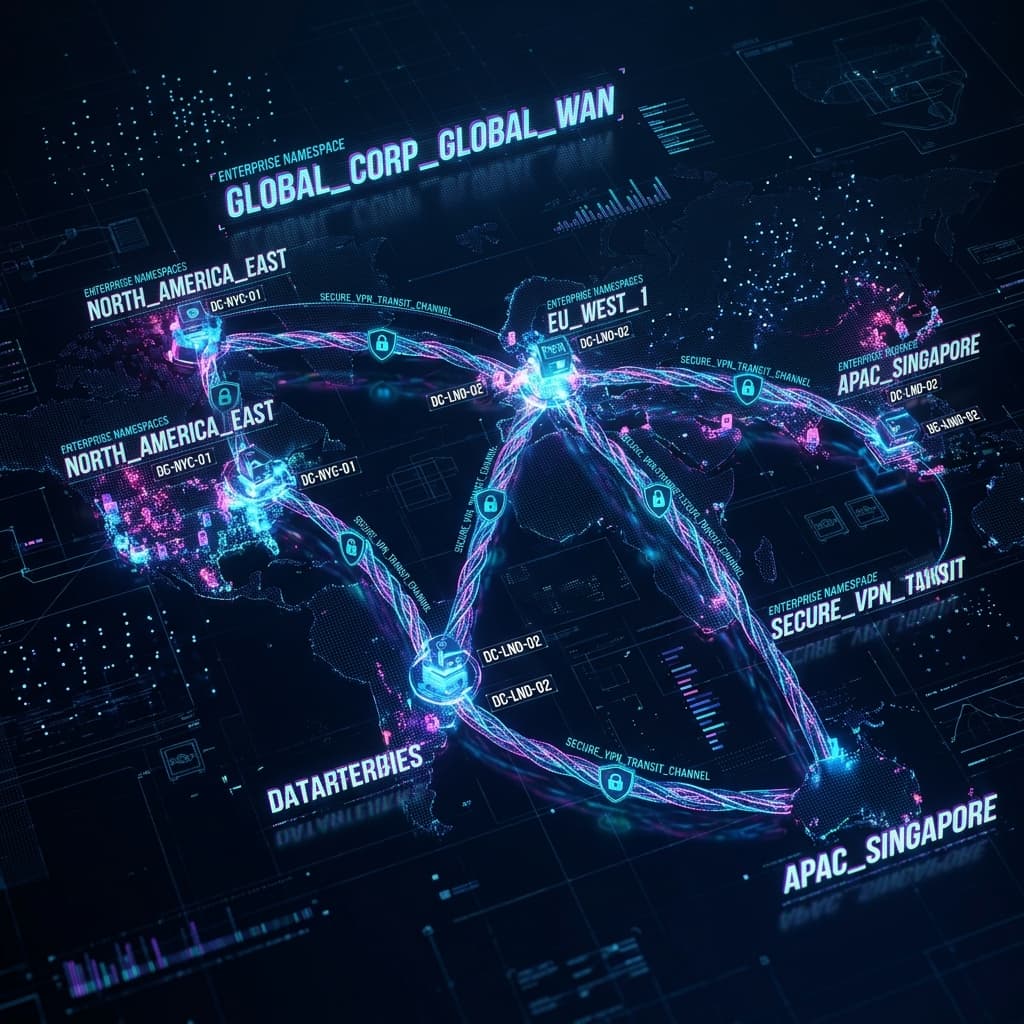
🗺️ Multi-Datacenter WAN Federation Topology
This architecture bridges active datacenters over a secure, encrypted WAN federation mesh, utilizing Consul Enterprise Mesh Gateways to secure cross-region communications without exposing internal node addresses:
🛡️ Enterprise Pillars & In-Depth Service Analysis
To meet compliance regulations, the Enterprise Service Mesh project integrates HashiCorp Consul Enterprise with HashiCorp Vault. Below is a deep structural analysis of the core enterprise layers and their technical trade-offs:
1. Multi-Tenancy via Admin Namespaces
- Role: Logically isolates teams, applications, and environments within a single shared control plane cluster.
- Pros:
- Delegated Administration: Teams manage their own services, configurations, and intentions independently without colliding with other namespaces.
- Resource Efficiency: Eliminates the need to spin up multiple physical Consul clusters, saving thousands of dollars in hardware.
- Cons:
- Cross-Namespace Resolution Complexity: Connecting services across different namespaces requires writing explicit cross-namespace ingress upstreams, raising configuration overhead.
2. High-Availability WAN Federation over Mesh Gateways
- Role: Connects independent Consul clusters across multiple physical networks and geographical datacenters.
- Pros:
- Active-Active Failover: Upstream callers automatically redirect requests to remote datacenters if local instances fail.
- IP Address Independence: Nodes do not need direct routing capabilities or shared VPN bridges. All cross-region traffic routes strictly through secure public Mesh Gateways.
- Cons:
- Network Latency: Synchronizing states across WAN links introduces natural latency bounds. Services must be carefully configured to prefer local targets unless a failover is active.
3. Cryptographic Security & Secrets Integration (HashiCorp Vault)
- Role: Serves as the high-speed backend Certificate Authority (CA) to generate short-lived dynamic mTLS certs and auto-unseal Consul nodes.
- Pros:
- Dynamic Certificate Rotation: Vault issues short-lived cryptographic certs (e.g. 24-hour lifespans), rendering stolen certificates useless.
- Audit-Ready Compliance: Centralizes encryption keys, token rotations, and network access policies in a secure HSM or Vault core.
- Cons:
- Extreme Bootstrapping Interdependency: If Vault is offline during a system-wide cold boot, Consul cannot fetch certificates to establish communication, leading to boot locks if not architected with fallback policies.
💻 Declarative Configuration Examples
A. Terraform: Deploying Consul Enterprise Namespaces
# namespaces.tf - Declares logical organizational boundaries
resource "consul_namespace" "payments" {
  name        = "payments"
  description = "PCI-compliant payment processing services"

  meta = {
    team  = "fintech-ops"
    stage = "production"
  }
}

resource "consul_namespace" "auth" {
  name        = "authentication"
  description = "IAM and Session tokens identity mesh"
}
B. Consul Intention: Enforcing Zero-Trust Access Policies
# payments-intention.hcl - Restricts data mesh access
Kind = "service-intentions"
Name = "payment-processor"
Namespace = "payments"

Sources = [
  {
    Name      = "web-portal"
    Namespace = "default"
    Action    = "allow"
  },
  {
    Name      = "reporting-agent"
    Namespace = "analytics"
    Action    = "deny"
  }
]
💡 Key Operational Playbook Lessons
- Enforce Strict Intention Defaults: Configure the default mesh policy to
deny-all. Services must be explicitly permitted to communicate using intentions, preventing unauthorized lateral movements in the case of a compromised container. - Monitor Mesh Gateway Saturation: WAN federation routes all external traffic through mesh gateways. Implement auto-scaling policies on gateway containers to handle regional network spikes.
- Automate Token Rotations: Relying on permanent ACL tokens is a major security risk. Integrate Consul with Vault's dynamic credentials engine to issue temporary access tokens automatically.